Tapondus
Expanse of Pathol
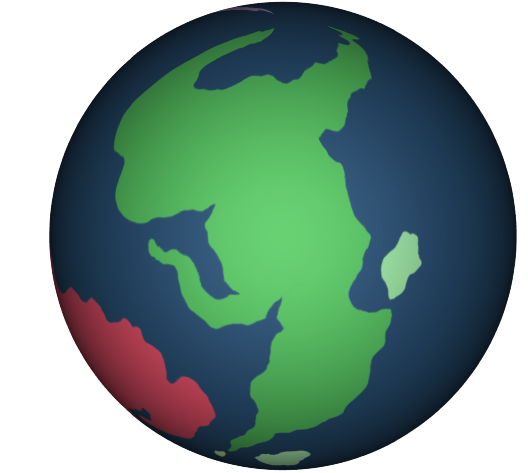
The Tapondus is an elusive creature of unknown origin that inhabits the central region of the massive Automida forests of the terrain Planet Spesnova with its recently completed index of the North Eastern landmass known as Igneous. It is believed to have lived on the planet for a millennium before Earth's discovery of Spesnova. It is one of the most recent studies from our scientists due to its sparse quantity and the many orbital rotations it spends in hypersleep buried in the ground. As they travel in isolation for miles at a time they often do not cross paths with their own kind, making its species population estimated to only be in the hundreds. Forced reproduction experiments have been conducted to no avail as most have very introverted tendencies and will go into hypersleep in an effort to avoid stressors like captivity.
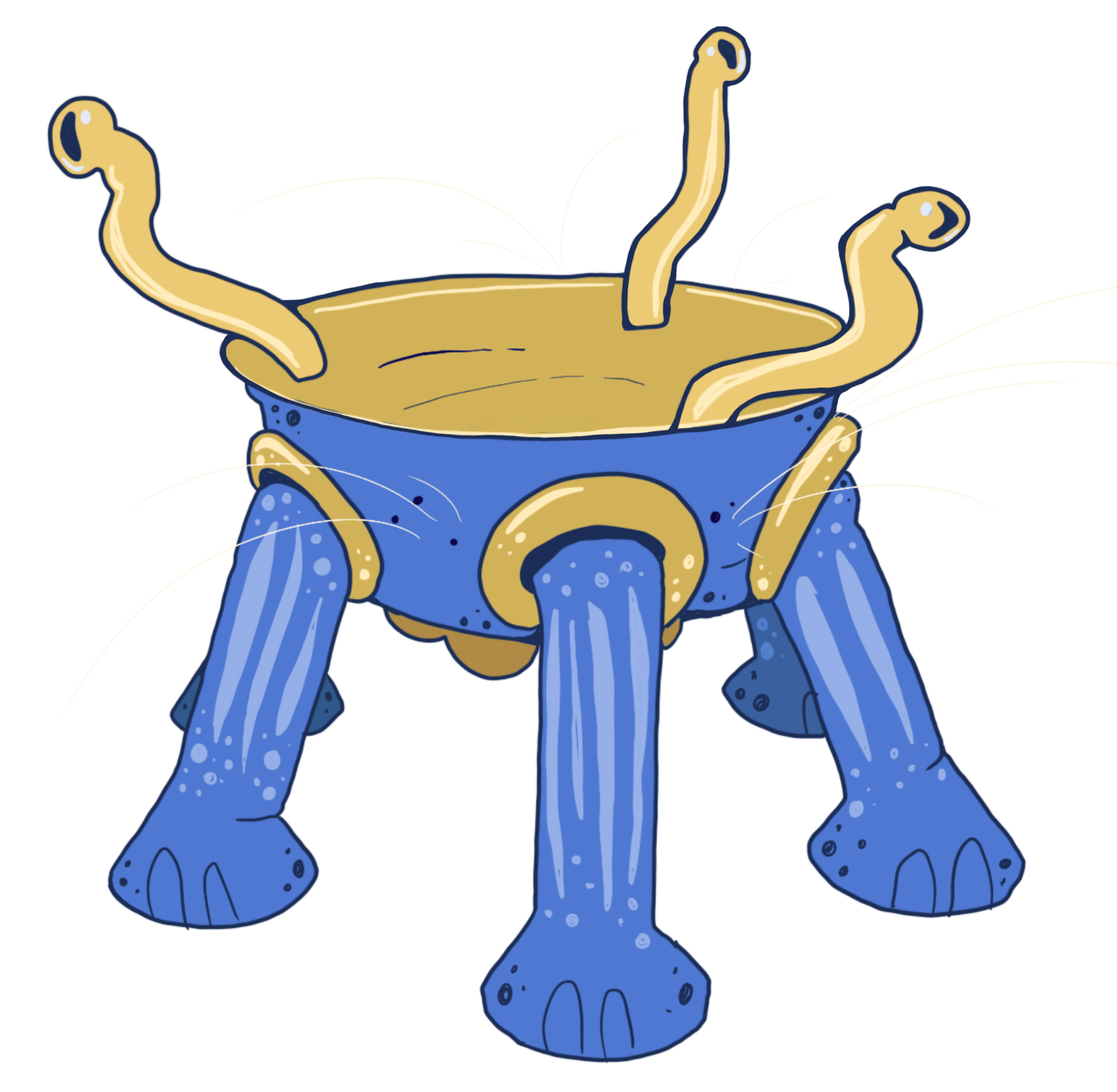
Their anatomy consists of six omnidirectional stocky legs, giving them the ability to move in all directions. Each leg ends with a foot so dense that when the Tapondus plants its feet it becomes completely immovable. After a thorough examination, our celestial scientists have concluded the creatures' feet contain similar materials as neutron stars found in our home galaxy, the debris coming from exploded stars is so dense a pebble-sized specimen weighs millions of Earth tones. Microscopic pieces of these neutron star fragments were found in the biological makeup of the Tapondus species leading us to believe this planet has been in orbit of an exploded star. With no nearby traces of such stars, predictions have been made that possibly the planet itself was formed in conjunction with said neutron stars creating the possibility of finding similar features in other species.
Similar to the biology of some of our Earth invertebrates, Tapondus have three optical tentacles for a 360 vision of their surroundings. These tentacles are flexible and retractable due to their soft and mucus-coated outer skin. These eyes are also retracted when in hypersleep.
Their digestion is similar to that of Earth’s Pitcher Plant as the Tapondus do not hunt for food, they simply let it come to them. The wide opening at the top of what we consider the “head” of the creature secretes a slimy mucus creating a trap for anything that may fall into its bowl-shaped head. The Tapondus can digest nearly anything that finds its way stuck in its sticky trap. Once stuck the food is pulled down to the center of the bowl and down the hole to the creature's open acid storage where the nutrients are broken down and absorbed into its internal lining. Because most of what falls into the creature’s trap are what we can only describe as “fungal-like spores” that float around this planet's lower atmosphere and other small, usually flying, creature the Tapondus takes what it can get and uses its hypersleep to prolong its life until successful reproduction.
While in hypersleep the Topondus bury their legs in the ground and therefore are unable to be pulled out due to its foot density defense. In early hypersleep, they are able to continue to catch food in their bowl but with the planet's lush biosphere and changing atmosphere, the Topondus often get buried and continue their sleep only surviving on bodily storage. They just have to time it right before getting stuck underground and being absorbed by the hypothesized “living” ground floor of this particular Northern land mass.